Modern automotive Ethernet networks require more than static switch configuration.

Engineering teams need a consistent way to define network behavior, deploy configurations, integrate security mechanisms and access switch functionality during operation. The joint Technica Engineering and Realtek implementation addresses these needs by combining:

FLYNC for structured network configuration
Automated deployment workflows
MACsec for authenticated
switch-to-switch communication
Switch Management via SOME/IP for runtime interaction
This creates a more integrated approach to switch software, helping teams reduce configuration complexity, and bring switch behavior closer to modern software-defined development workflows.

One stack for configuration, security and runtime management

The Technica Switch Software Stack, running on the Realtek switch, provides the software layer that connects switch configuration, deployment, and operation.

Instead of treating these as separate tasks, engineering teams can work with a more unified workflow:

Define configuration in a structured model

Deploy it in an automated way

Secure communication between switches

Access switch functionality during runtime

How the implementation works

From declarative configuration models to hardware-authenticated communication and dynamic management and monitoring of the switch.

STAGE 1
Configuration with FLYNC
Network and switch configuration are defined using FLYNC, enabling a structured and repeatable Configuration-as-Code workflow via an open-source solution.
STAGE 2
Automated deployment
Configuration changes can be validated and applied through an automated pipeline, reducing manual effort and helping teams maintain consistency between design and deployment.
STAGE 3
Secure communication
with MACsec
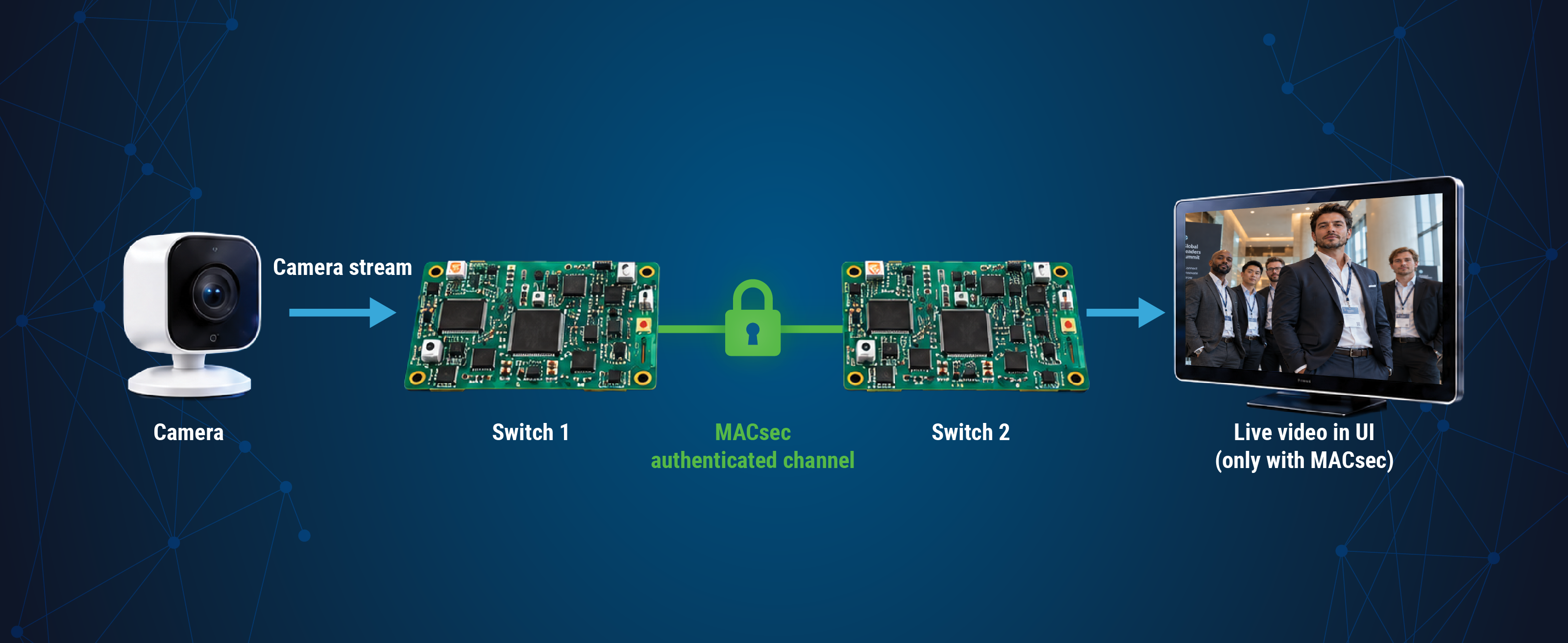
MACsec is used to establish authenticated communication between two Realtek switches. When the correct MACsec-enabled configuration is applied, the communication channel is established and traffic is forwarded. Without the required secure configuration, the channel cannot be established and traffic is blocked.
STAGE 4
Runtime Switch Management via SOME/IP
At the same time, Switch Management via SOME/IP provides access to switch functionality during operation, enabling interaction with the switch through a standardized interface.

What this collaboration enables

Unifying automotive silicon capabilities with modern declarative software development workflows.

Configuration as Code
Use FLYNC to define switch configuration in a structured network model and integrate it into development workflows.
Automated switch deployment
Apply validated configurations through an automated pipeline instead of relying on disconnected manual flashing steps.
Secure switch-to-switch communication
Use MACsec to enable authenticated communication across the Ethernet network.
Standardized runtime access
Use SOME/IP to interact with switch functionality during operation.

Why it matters

Simplifying automotive Ethernet switch integration. For engineering teams, this approach helps to:

Tick Mark

Reduce configuration effort by using structured and repeatable workflows

Tick Mark

Improve consistency between network definition and deployment

Tick Mark

Integrate security earlier into the switch software workflow

Tick Mark

Standardize switch access during runtime

The result is a more scalable and software-oriented way to integrate switch functionality into automotive Ethernet architectures.

Interested in our solution?

See it in action with our experts.