
.png)
Software-Defined Vehicles Demand Adaptive Switch Hardware
In many automotive Ethernet architectures, switch behavior is largely fixed after configuration. However, software-defined vehicle platforms increasingly require network behavior that can react dynamically to operating conditions. The joint Technica Engineering and Broadcom implementation demonstrates how this can be achieved through:
.svg)
Vehicle-state-driven switch control
.svg)
Switch Management via SOME/IP
.svg)
Runtime activation and deactivation of filtering rules
.svg)
Software-controlled switch behavior without reboot or full reconfiguration
.svg)
This creates a more flexible and software-driven approach to automotive Ethernet switch integration.
Dynamic Network Behavior Inside the Switch
Technica Switch Software Stack
Our stack running on a Broadcom switch enables applications to interact with the switch through a standardized SOME/IP interface.
Vehicle-State Management
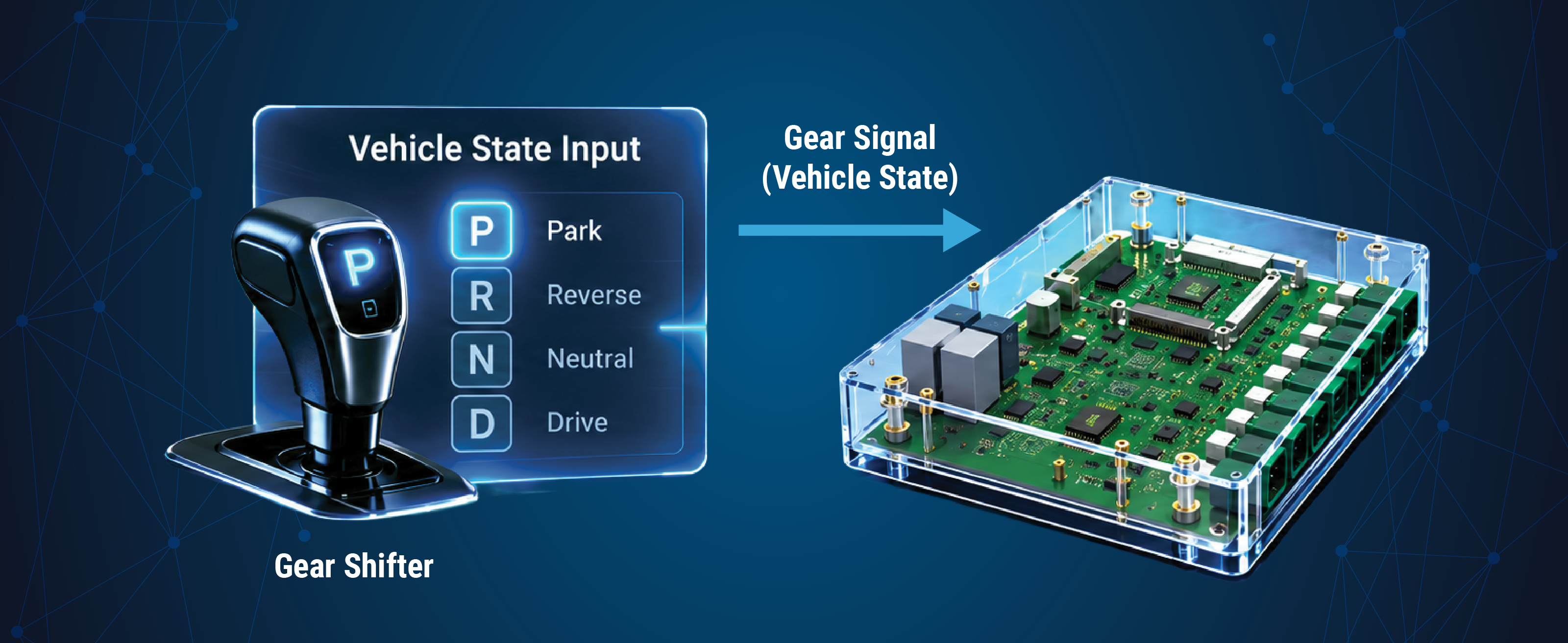
State information is shared with the switch during operation, making it a state-aware networking peer in the system.
State-based configuration in runtime
Based on the saved state in the switch the internal configuration is modified during runtime. No restart or full reconfiguration required, enabling the switch to be an active part of the vehicle's runtime logic.
What This Collaboration Enables
Technica Engineering’s automotive software expertise combined with Broadcom’s silicon performance unlocks next-generation in-vehicle networking capabilities.
Dynamic Adaptation
Vehicle-state-driven control
Use vehicle-state information to influence switch behavior dynamically.
Hardware Tables
Runtime TCAM rule updates
Enable or disable relevant TCAM rules during operation.
Standard API
Standardized SOME/IP interaction
Use a software-defined interface for switch communication and state handling.
Embedded Co-Processing
Switch software in the switch cores
Run the Technica Switch SW Stack directly in the Broadcom switch cores for tighter integration and runtime control.
Why it matters
From static switch behavior to software-controlled networking. For engineering teams, this approach helps to:

Adapt network behavior dynamically to changing vehicle conditions,
Reduce manual reconfiguration effort,
React faster during runtime,
Support software-defined vehicle architectures with more flexible switch behavior.
The result is a more advanced switch integration model in which network behavior can be controlled as part of the vehicle software system.
Interested in our solution?
See it in action with our experts.
